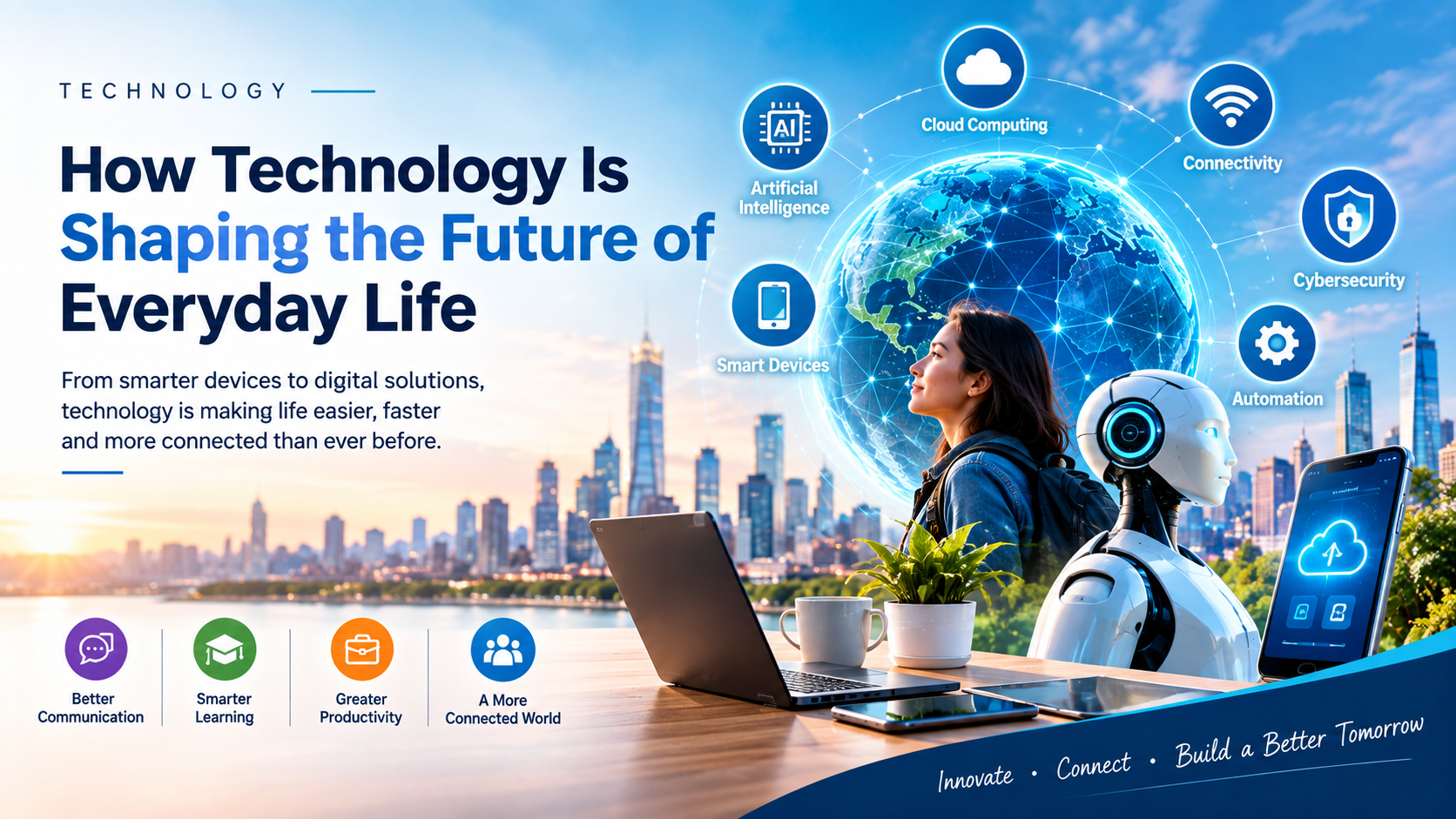
Technology has become an important part of modern life. People use smartphones, computers, online services, and digital applications for communication, entertainment, shopping, education, banking, and many other activities. Businesses also depend on technology to manage operations, serve customers, and remain competitive.
Digital technology has made communication faster and easier. Email, instant messaging, video conferencing, and social media allow people to connect with others across different locations. Businesses can communicate with employees, customers, and partners in real time, supporting better collaboration and productivity.
Artificial intelligence (AI) is one of the most important technology developments today. AI can help analyze information, automate repetitive tasks, provide recommendations, and support decision-making. It is being used in areas such as customer service, healthcare, education, finance, marketing, and software development.
Cloud computing allows people and organizations to access applications, storage, and computing resources over the internet. Businesses can store data securely, collaborate on documents, support remote work, and scale their technology resources based on their needs.
Technology has transformed learning by making educational resources more accessible. Online courses, digital classrooms, educational applications, and video lessons allow students to learn from different locations. Teachers can also use digital tools to create interactive and engaging learning experiences.
Smartphones, smart home devices, wearable technology, and automated systems are becoming increasingly common. These technologies can help people monitor activities, control devices, organize schedules, and automate routine tasks, making everyday life more convenient.
Businesses use technology to improve productivity and customer experiences. Digital payment systems, customer relationship management tools, analytics platforms, automation, and online marketing help organizations operate more efficiently and reach customers through digital channels.
As technology use increases, protecting digital information becomes increasingly important. Strong passwords, multi-factor authentication, software updates, secure networks, regular backups, and employee awareness can help reduce cybersecurity risks and protect sensitive information.
The future of technology will continue to bring new innovations. Artificial intelligence, robotics, cloud computing, advanced connectivity, automation, and other emerging technologies may create new ways to work, communicate, learn, and solve complex problems.
Technology provides many benefits, but it should be used responsibly. Protecting personal information, maintaining digital security, verifying online information, managing screen time, and understanding how digital tools work can help people make better use of technology.
Technology continues to transform everyday life and modern business. By adopting useful innovations, maintaining strong security practices, and using digital tools responsibly, individuals and organizations can take advantage of technology while preparing for the opportunities of the future.