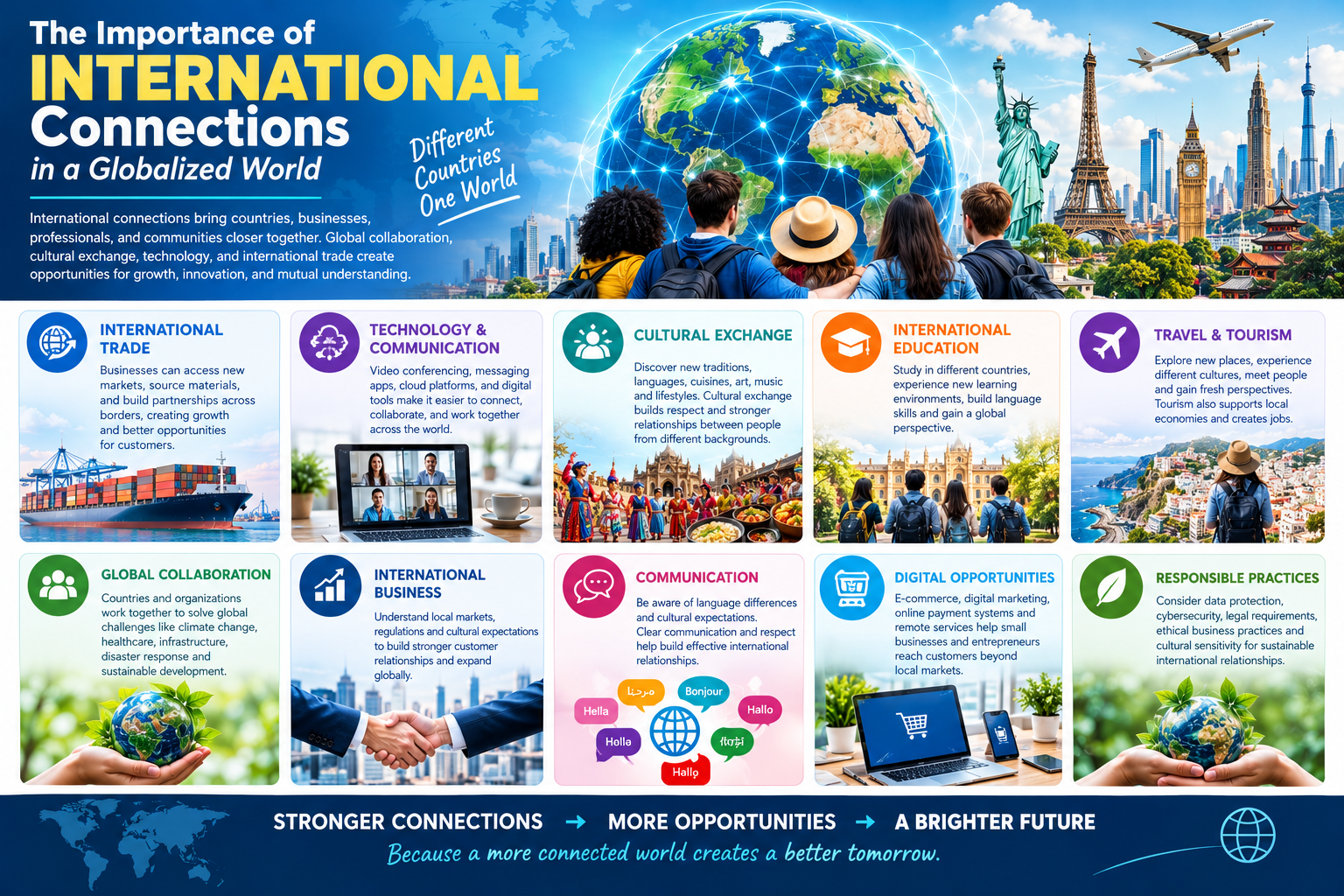
The world has become increasingly connected through technology, transportation, communication, and international cooperation. People and organizations can communicate and collaborate across borders more easily than ever before. These international connections have created new opportunities in business, education, travel, technology, and cultural exchange.
International trade is one of the major factors connecting economies around the world. Businesses can purchase materials from different countries, sell products to international customers, and establish partnerships with organizations across borders. Global trade allows companies to access new markets while giving customers access to a wider range of products and services.
Technology has made international communication faster and more convenient. Video conferencing, messaging applications, cloud platforms, social media, and digital collaboration tools allow people from different countries to work together in real time. Remote work has further expanded opportunities for international teams and global businesses.
Cultural exchange is another important benefit of international connections. People can learn about different traditions, languages, cuisines, art, music, and lifestyles through travel, education, media, and online communities. Understanding different cultures can encourage respect and create stronger relationships between people from diverse backgrounds.
International education provides students with opportunities to study in different countries and experience new learning environments. Studying abroad can help students develop academic knowledge, language skills, independence, and a broader understanding of the world. International academic partnerships can also support research and knowledge sharing.
Travel plays an important role in connecting people internationally. Visiting different countries allows travelers to experience new cultures, explore historical locations, meet people, and gain new perspectives. Tourism also contributes to local economies by supporting hotels, restaurants, transportation services, and other businesses.
International collaboration is particularly valuable when addressing global challenges. Countries and organizations can work together on issues such as environmental protection, technological development, public infrastructure, disaster response, and economic development. Cooperation allows different regions to share knowledge, resources, and expertise.
Businesses operating internationally also need to understand local markets. Customer preferences, regulations, languages, cultural expectations, and business practices can vary significantly between countries. Companies that research international markets and adapt their strategies accordingly can build stronger relationships with global customers.
Communication is especially important in international environments. Language differences and cultural expectations can sometimes create misunderstandings. Clear communication, cultural awareness, and respect can help organizations and individuals build more effective international relationships.
Digital technology has also created opportunities for small businesses and entrepreneurs to reach customers beyond their local markets. E-commerce platforms, digital marketing, international payment systems, and online services can allow businesses to expand their reach without requiring a physical presence in every country.
International connections also require responsible practices. Organizations should consider data protection, cybersecurity, legal requirements, ethical business practices, and cultural sensitivity when operating across borders. Understanding local regulations and respecting different communities can help create sustainable international relationships.
The future will likely become even more internationally connected as technology continues to advance. Artificial intelligence, cloud computing, digital communication, online education, and global commerce will continue to make collaboration across borders easier.
Ultimately, international connections provide opportunities for people and organizations to learn, collaborate, trade, innovate, and grow. By embracing cultural diversity, communicating effectively, and working together across borders, the global community can create stronger relationships and build a more connected future.