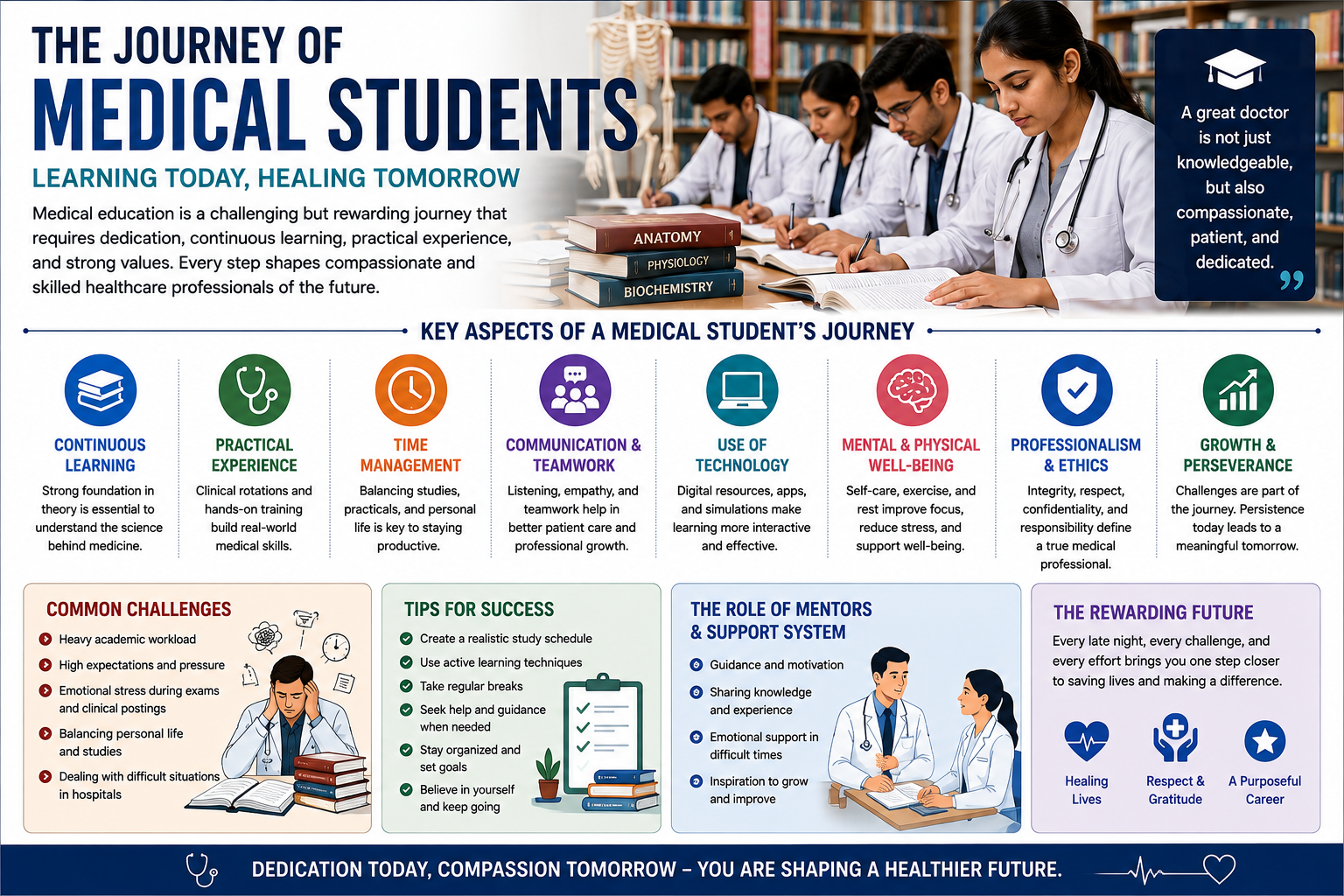
Becoming a medical professional is a long and challenging journey that begins with medical education. Medical students spend years developing their knowledge, practical skills, communication abilities, and professional judgment. Their education prepares them to understand the human body, recognize health conditions, work with healthcare teams, and provide responsible care in the future.
One of the most important aspects of medical education is continuous learning. Medical students study subjects such as anatomy, physiology, pathology, pharmacology, and clinical medicine. As they progress through their education, they move from theoretical concepts toward practical learning and clinical experiences.
Time management is essential for medical students. The large amount of information that needs to be studied can make it difficult to balance lectures, assignments, examinations, practical sessions, clinical rotations, and personal responsibilities. Creating a realistic study schedule and setting priorities can help students manage their workload more effectively.
Practical experience is another important part of medical education. Clinical rotations allow students to observe healthcare professionals, interact with patients under appropriate supervision, and understand how medical knowledge is applied in real-world situations. These experiences can help students develop communication, teamwork, observation, and problem-solving skills.
Technology has also transformed medical education. Digital textbooks, online learning platforms, medical applications, virtual simulations, educational videos, and electronic resources provide students with additional ways to study and review complex subjects. Technology can make learning more flexible while giving students access to information from a variety of sources.
Medical students also need strong communication skills. Healthcare involves interacting with patients, families, doctors, nurses, and other professionals. Learning how to listen carefully, explain information clearly, communicate respectfully, and work as part of a team is an important part of becoming a successful healthcare professional.
Examinations and academic pressure can be significant challenges. Students may need to prepare for multiple assessments while continuing their regular studies and practical training. Developing effective study techniques, maintaining an organized routine, and seeking academic support when needed can make the learning process more manageable.
Maintaining a balanced lifestyle is also important. Students should make time for adequate rest, physical activity, hobbies, relationships, and relaxation. A sustainable routine can help students remain focused and productive throughout their demanding education.
Professionalism is another important part of medical training. Medical students learn about responsibility, confidentiality, ethical decision-making, respect, teamwork, and appropriate professional behavior. These principles help prepare students for the responsibilities they will eventually have as healthcare professionals.
The journey of a medical student is challenging, but it can also be highly rewarding. Every lecture, practical session, clinical experience, and examination contributes to the development of knowledge and professional skills. With dedication, effective learning habits, supportive mentors, and a commitment to continuous improvement, medical students can build a strong foundation for their future careers.