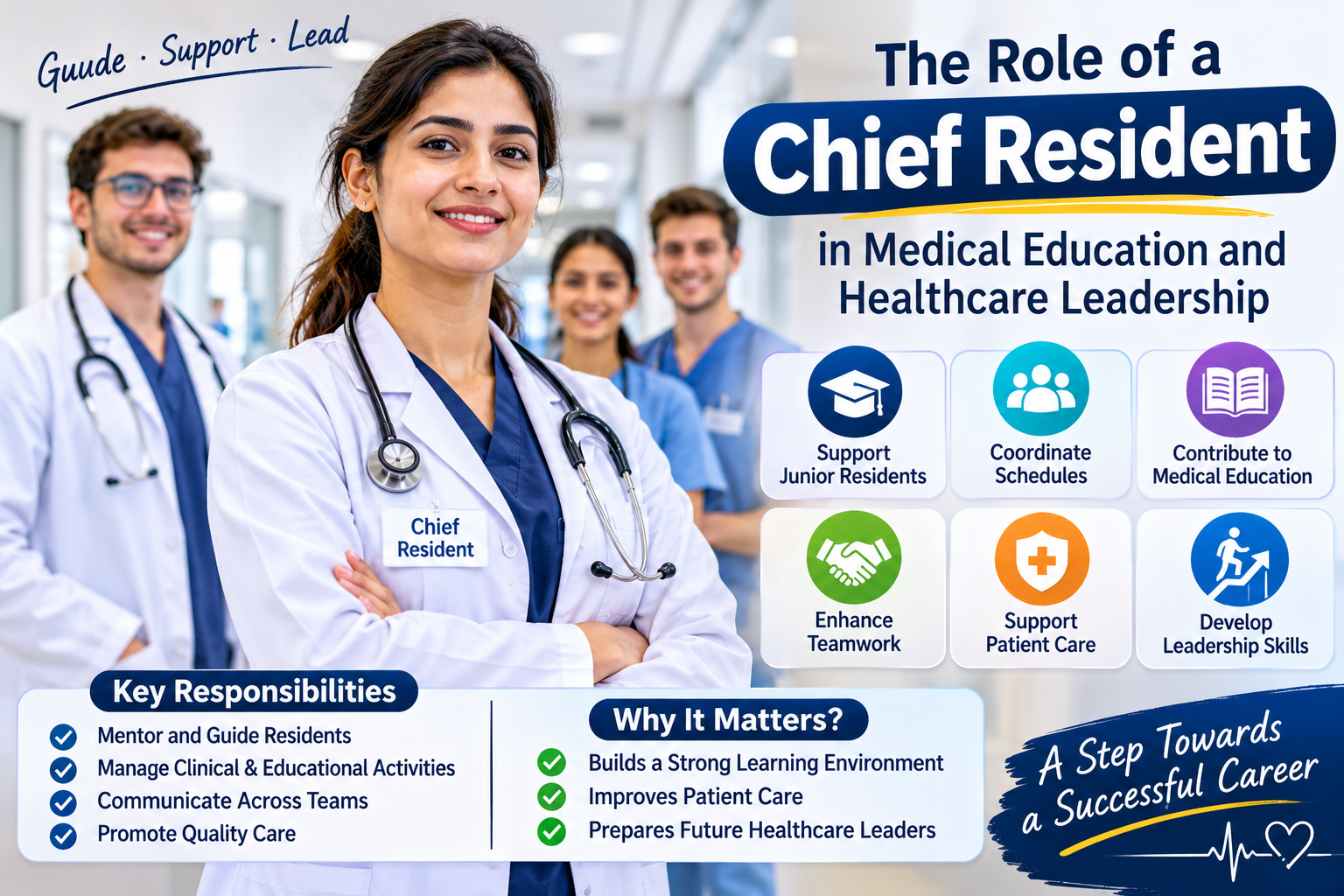
A Chief Resident is a senior medical resident selected to take on additional leadership and administrative responsibilities during residency training.
Chief Residents are usually experienced residents who demonstrate strong clinical knowledge, communication skills, professionalism, and the ability to support their colleagues.
They continue participating in clinical work while also helping manage resident schedules, coordinate educational activities, and communicate with hospital departments.
A Chief Resident helps maintain coordination between medical residents, attending physicians, program directors, and hospital administration.
Their role is important because residency programs involve demanding schedules, clinical responsibilities, educational requirements, and teamwork across different departments.
By supporting communication and organization, Chief Residents help create an environment where residents can learn, collaborate, and provide effective patient care under appropriate supervision.
The responsibilities of a Chief Resident can vary depending on the hospital, medical specialty, and residency program.
Common responsibilities include:
Coordinating resident schedules and rotations.
Supporting junior residents during training.
Communicating concerns to program leadership.
Helping organize educational meetings and clinical conferences.
Assisting with administrative tasks.
Encouraging teamwork and professional behavior.
Supporting quality improvement activities.
Helping resolve workplace communication issues.
These responsibilities require organization, reliability, and the ability to balance clinical duties with leadership activities.
One of the most important responsibilities of a Chief Resident is helping junior residents adjust to the demands of medical training.
New residents may need guidance with hospital procedures, clinical workflows, documentation, communication, and teamwork.
A Chief Resident can help by sharing practical experience, explaining expectations, encouraging questions, and directing residents toward appropriate faculty support.
Creating a welcoming learning environment helps junior doctors develop confidence and professional skills.
Strong leadership is essential for a successful Chief Resident. The position requires the ability to coordinate teams, communicate expectations, address concerns, and make responsible decisions.
Important leadership skills include:
Communication: Sharing information clearly with residents, faculty, and hospital staff.
Teamwork: Encouraging cooperation between different healthcare professionals.
Time Management: Balancing clinical responsibilities with administrative duties.
Problem-Solving: Addressing scheduling difficulties and workplace challenges.
Conflict Resolution: Helping manage disagreements professionally.
Decision-Making: Evaluating situations and seeking appropriate guidance when needed.
These skills can help Chief Residents become more effective leaders in their future medical careers.
Although Chief Residents have additional leadership responsibilities, patient care remains an important part of their work.
They may participate in clinical activities, support communication between care teams, and help residents follow established clinical protocols.
Their role is not to replace attending physicians or independently supervise beyond their authorized responsibilities. Instead, they help support coordination and learning within the clinical team.
Effective communication, appropriate supervision, and patient safety should remain priorities.
Chief Residents often contribute to the educational development of other residents.
Depending on the program, they may help organize teaching sessions, case discussions, clinical presentations, journal clubs, and examination preparation activities.
They can also encourage residents to share knowledge and discuss clinical experiences in a structured learning environment.
These activities support continuous learning and help strengthen the academic culture of a residency program.
Being a Chief Resident can be rewarding, but it also comes with significant challenges.
Common difficulties include:
Managing clinical duties alongside administrative responsibilities.
Coordinating schedules and handling last-minute changes.
Supporting residents with different learning needs.
Managing disagreements within teams.
Communicating difficult decisions.
Balancing professional responsibilities with personal well-being.
Handling pressure during demanding hospital shifts.
Developing good organizational habits, maintaining open communication, and seeking guidance from program leadership can help manage these challenges.
Mentorship is an important part of the Chief Resident role. Junior doctors often benefit from guidance from someone who has recently experienced similar training challenges.
A good Chief Resident listens to concerns, shares useful experiences, provides constructive feedback, and encourages professional development.
Mentorship also helps create a supportive environment where residents feel comfortable asking questions and learning from mistakes.
Residents interested in becoming Chief Residents can begin developing relevant skills throughout their training.
Useful steps include:
Demonstrate professionalism and responsibility.
Develop strong communication skills.
Participate actively in educational activities.
Support teamwork and collaboration.
Build effective time-management habits.
Show interest in mentoring junior colleagues.
Seek feedback from faculty and supervisors.
Understand the leadership expectations of the residency program.
Selection criteria vary between institutions, so residents should understand their program's specific requirements.
The experience gained as a Chief Resident can support future career development.
Former Chief Residents may pursue careers in clinical medicine, academic medicine, medical education, hospital administration, research, or healthcare leadership.
The position can also provide valuable experience for those interested in teaching, mentoring, and improving healthcare systems.
The leadership and communication skills developed during this period can remain useful throughout a medical career.
Chief Residents often manage demanding clinical schedules and additional responsibilities. Maintaining personal well-being is therefore important.
Effective time management, appropriate delegation, regular breaks, supportive professional relationships, and healthy personal routines can help reduce unnecessary stress.
Seeking help when responsibilities become overwhelming is also an important part of responsible leadership.
A Chief Resident is an important part of medical education and hospital teamwork. By supporting junior residents, coordinating responsibilities, contributing to education, and helping maintain effective communication, Chief Residents strengthen the residency experience.
The position offers valuable opportunities to develop leadership, mentorship, organization, and decision-making skills. Although the role involves challenges, it can be an important step toward a successful career in medicine, education, and healthcare leadership.